
Explore Bitcoin’s Legal Status in Different Countries
Have you heard of crypto regulation? Looking into is Bitcoin legal in different countries is important. It shows a wide range of rules and points of view. Some countries accept it as a valid form of currency, but others have strict rules or even open bans against it. Some countries, like the US, Japan, and Germany, have made Bitcoin legal, which has helped it grow and become more integrated into banking systems.
China and India, on the other hand, have put in place strict rules or outright bans because they are worried about financial security and regulatory control. People and companies that want to do business in the global cryptocurrency market need to understand these legal factors of crypto regulation. They will have a big impact on how Bitcoin is used and regulated in the future.
Understand Crypto Regulation Policies
In the past few years, cryptocurrencies have become very famous, but the rules that govern them are still complicated and changing. To get around this area well, you need to understand the different rules that apply to digital currencies and crypto regulation.
The Legal Status Of Cryptocurrencies
The laws in different places are very different about how cryptocurrencies are treated. Some countries have fully accepted digital currencies and set up clear rules for how they can be used, but others are still unsure or have completely banned them.
Regulatory bodies like the Securities and Exchange Commission (SEC) and the Commodity Futures Trading Commission (CFTC) decide what the law says about crypto regulation in places like the United States.
For example, the CFTC sees Bitcoin as a commodity and regulates it accordingly. The SEC, on the other hand, sees some digital assets as stocks and regulates them accordingly. Japan and Switzerland, on the other hand, have been more open to crypto regulation. They see them as legal money and have put in place strong regulatory systems to protect investors and encourage innovation.
But not every country has welcomed cryptocurrencies with open arms. Some countries, like China, have put in place strict rules or outright bans on trading and mining cryptocurrencies out of worry for financial stability and capital flight.
Cryptocurrency regulations are not all the same, which makes things hard for companies and investors who do business in more than one jurisdiction. To get around this complicated area, you need to carefully think about the local rules and laws to make sure you follow them and lower your legal risks.
Countries That Forbid The Use Of Bitcoin
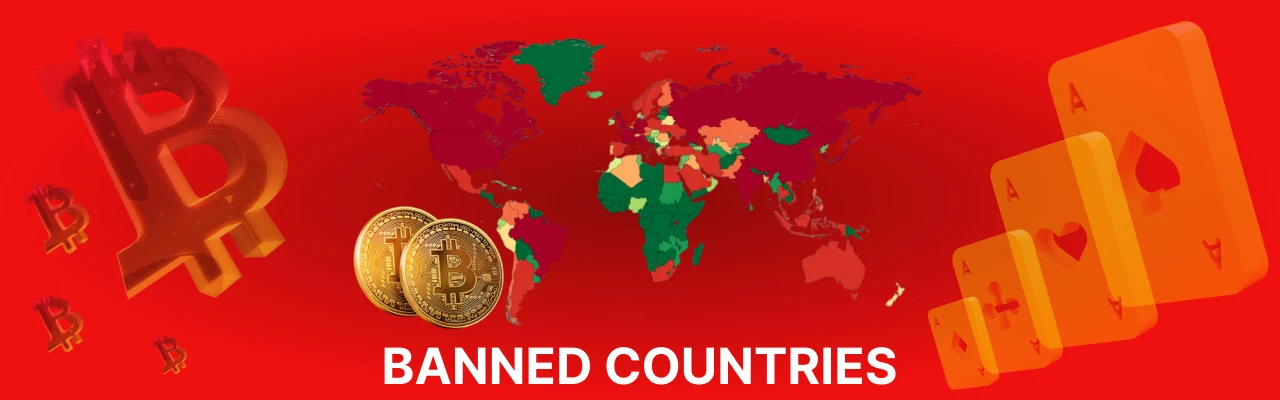
Bitcoin, the first cryptocurrency, has become very famous all over the world. But some governments have put limits on its use or even banned it completely. One of them is Bangladesh, whose central bank has made Bitcoin illegal because of worries that it could be used to hide money and fund terrorism. Bolivia did the same thing and banned any cash that wasn’t issued or controlled by the government.
Ecuador did the same thing. It made its own digital currency backed by the government and banned Bitcoin and other decentralized coins. The government of Nepal says that Bitcoin trades are illegal because there aren’t enough rules in place.
Algeria, Morocco, and Pakistan are some other countries that don’t allow Bitcoin. These rules are usually put in place because people are worried about the economy, government control, and possible illegal activity. As digital currencies continue to change, it’s still hard for Bitcoin e to figure out how to deal with the rules.
- Algeria.
- Bolivia
- Bangladesh
- Dominican Republic
- Ghana
- Nepal
- The Republic Of Macedonia
- Qatar
- Vanuatu
Countries Where Legal Restrictions Apply To Bitcoin
Bitcoin is the most popular cryptocurrency in the world, and it works in a decentralized digital setting. It gives a lot of people access to money and freedom, but different countries have different laws that limit how it can be used.
Some countries have accepted Bitcoin as a real way to pay for things and spend money. Others, on the other hand, have strict rules or even total bans because they are afraid of money laundering, tax evasion, and financial instability.
Countries like the US, Japan, and the UK have set up rules to control crypto regulation. These rules encourage new ideas while protecting people from doing illegal things. On the other hand, countries like China, India, and Algeria have taken strict steps that either ban or severely limit Bitcoin transactions and trading platforms.
- Bahrain
- China
- Hong Kong
- Iran
- Kazakhstan
- Russia
- Saudi Arabia
- Turkey
- Vietnam
Countries That Have Legalised Bitcoin
Bitcoin, the first decentralized digital currency, was launched in the market in 2009. In the last decade, it has gained much popularity. Although its legal status and regulation vary from nation to nation, there are some countries that are the best examples of the way Bitcoins can be accepted as a licensed currency or chosen as an asset under crypto regulation.
- Antigua And Barbuda: Antigua and Barbuda have approved Bitcoin as the legal means of paying for citizenship via citizenship by investment program.
- Australia: Bitcoin is not a currency in Australia; rather, it is treated as property and is consequently subject to capital gains tax. It has realized this task by introducing rules that stop money laundering and terrorism financing by using cryptocurrencies.
- Barbados: While Barbados has chosen to regulate cryptocurrencies with a view to fostering the innovation and growth of the fintech sector, it has also established several regulatory bodies to govern the emerging market.
- Belgium: Belgium’s VAT includes Bitcoin transactions while it has not accepted them as legal tender supercool fashion. But it is also an option for people to buy, sell, and hold Bitcoin assets as an investment way.
- Bulgaria: Bulgaria has not officially announced the legal tender status, but virtual currency is recognized as such. The country has a rule that imposes a 10% tax on proceeds from trading cryptocurrencies.
- Cayman Islands: The Cayman Islands authorities have created a regulatory framework for cryptocurrency businesses, including Bitcoin exchanges and ICOs, who are operating within the confines of specific provisions.
- Chile: Chile accepted Bitcoin as well as other cryptocurrencies by including them into their list of taxable category as intangible assets, which are subject to income tax. Despite it, the central bank of the country has mentioned all the aspects associated with the risk.
- Croatia: Croatian law now recognizes such digital currencies like Bitcoin as means of settlements. On one hand, it makes transactions subject to taxing such as income tax or capital gains tax.
- Dominica: Since Dominica is a country that has an open and positive approach to Bitcoin, the new businesses that are related to blockchain technology and cryptocurrency are very actively stimulated.
- Estonia: Estonia has become the blockchain-friendly country that already offers the digital residence (e-residency) to attract crypto businesses including startup companies.
- Finland: The case of Finland seeing Bitcoin as a commodity for tax purposes means that it is subject to capital gains tax if it is sold or exchanged for the goods.
- Germany: In Germany, Bitcoin is regarded as private money and a financial instrument, and it can be used for both personal and business operations. The taxation of capital gains generated through cryptocurrency transactions is mandatory.
- Indonesia: Indonesia legalized cryptocurrency, Bitcoin, as a good commodity and a means of settling payments. Nonetheless, the nation’s central bank prohibits financial institutions from providing services as a medium of cryptocurrency transactions.
- Italy: Nevertheless, Italy does not consider Bitcoin legal tender but opts for the exchange of it as a medium of payment. The incomes generated from cryptocurrency transactions are taxed according to the law while value-added tax (VAT) also comes into play.
- Ireland: Ireland adopted a guarded attitude when issuing Bitcoin, inserting it into the existing tax laws. To use Bitcoin, Financial transactions should be governed by the existing tax laws.
- Japan: Japan legalized Cryptocurrency as tender, which in turn facilitated its adoption and regulation for the sake of consumer protection and deprivation of money laundering.
- Malta: Malta is the main place for blockchain and cryptocurrency businesses by creating relevant laws for benefiting these sectors with investment and innovation as a result.
- Mauritius: Mauritius demonstrates that it is one of the countries with Bitcoin and blockchain technology, which provides a certain zone for cryptocurrency startups to experiment and develop their products and services.
- Marshall Islands: Marshall Islands are already developing their own sovereign (SOV) cryptocurrency, which, in conjunction with the US dollar, is the country’s national currency. Besides, Bitcoin can also be used inside the country as a method of payment.
- New Zealand: New Zealand treats Bitcoin as property for tax purposes; hence, it is charged at the goods and services tax level when transactions are made.
- Norway: Norway assimilates Bitcoin into the tax category of assets governed by capital gains tax, thus making this digital asset appropriate for investment and payment purposes.
- The Philippines: Bitcoin and other cryptocurrencies were legalized by the Philippines, and regulators are trying to curb possible fraud and protect consumers who use this new technology.
- Serbia: In Serbia, bitcoin, and other cryptocurrencies have recognized as digital assets and the legal framework allows people to buy, exchange and sell these digital assets.
- South Korea: South Korea has accepted bitcoin and blockchain system with all its glory, but has stringent regulations for cryptocurrency exchanges to fight against unjust activities.
- Sweden: The approach of Sweden to Bitcoin is progressive, they treat it as a commodity and for financial transaction of various types are allowed to use it.
- Switzerland: Switzerland has earned the name of being a crypto-friendly country due to its comfort in the rules of business and the existence of one of the biggest blockchain and cryptocurrency communities.
- Ukraine: Ukraine has legalized bitcoins and other cryptocurrencies which contributes to the development of blockchain technology and the adoption of these as means for money transmission and storage.
- The United Kingdom: Bitcoin is considered as UK private money and Capital gain tax is placed on it when sold. The jurisdiction has made legal provisions for crypto firms to start their business.
- The United Arab Emirates: The UAE has been an active player in the space of crypto and blockchain tech, trying to implement these concepts through different sectors, like finance and real estate.
- The United States: The United States does not treat Bitcoin as a currency but as a property, therefore subjecting to capital gains tax during sales or exchange. The country enforced its cryptocurrency monitoring system to oversee transactions and fight against crime.
- Uzbekistan: Uzbekistan has legitimized Bitcoin and other crypto currencies for practical use, hence, individuals and businesses are now able to buy, sell and do any other crypto transaction within the country.
- Venezuela: Venezuela as the country recognized and allowedBitcoin and some other cryptocurrencies as well, evaluating their role in combatting hyperinflation and economic instability.
Countries Officially Using Bitcoin As Currency
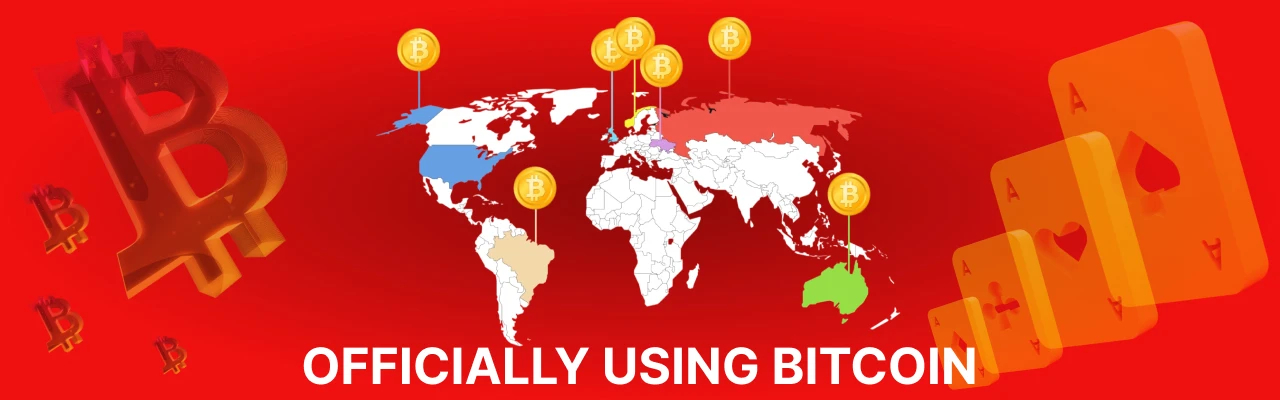
As the world of finance changes, some countries have taken a big step forward by making Bitcoin a real currency. These early adopters are using the fact that Bitcoin is decentralized to completely change their economies.
Countries like El Salvador have been at the forefront of accepting Bitcoin as legal currency, opening up new ways for people to get money and for businesses to come up with new ideas. Other countries, like Paraguay and Panama, are looking into similar plans of crypto regulation, which shows that the world is moving toward using digital currencies.
Even though there are still problems, these countries are leading the way for a future in which Bitcoin is a big part of how money works.
El Salvador
El Salvador was the first country in history to make Bitcoin its legal currency. This was a big step forward in the development of digital currencies under crypto regulation. This big step forward creates new opportunities for innovation and financial inclusion.
It also brings new challenges and chances for global economic systems. In El Salvador, Bitcoin is now legal tender along with the US dollar. Now, the whole world is closely watching to see how this crypto regulation plays out and whether it opens the door for other countries to adopt bitcoin as part of their official money systems.
Countries Where The Legal Status Of Bitcoin Is Unclear
There are several places across the globe where Bitcoin’s legal status is still ambiguous, growing a heated debate among regulators and creating uncertainties. The ambiguity is, in many cases, because of the decentralized characteristic of crypto regulation, which makes it hard to define and regulate them effectively using the traditional legal system.
Governments and crypto regulation agencies are confronted with the issue of categorizing Bitcoin in the present financial/legal structure, which results in different interpretations and approaches from different countries about crypto regulation.
Some countries opt for a cautious approach by just observing the changes that take place in the crypto space without going further to formulate proper regulations that will be in place. Some others say that the risks of Bitcoin include money laundering, tax evasion, and how it could affect financial stability.
The absence of clear laws can be a weakness that prevents businesses and investors from completely implementing bitcoin-related activities and might limit Bitcoin’s use in everyday life. In addition, it will result in an unstable setting for startups and innovators involving cryptocurrencies, which further impedes the development of crypto regulation.
- Albania
- Afghanistan
- Angola
- Anguilla
- Argentina
- Belize
- British Virgin Islands
- Brunei
- Cambodia
- Costa Rica
- Cuba
- Guatemala
- Haiti
- India
- Honduras
- Kenya
- Jamaica
- Latvia
- Lesotho
- Macau
- Malaysia
- Mexico
- Moldova
- Montenegro
- Pakistan
- Tajikistan
- Tanzania
- Samoa
FAQs
-
In which countries is Bitcoin considered legal tender?
Bitcoin is recognized as legal tender in El Salvador, marking a historic move as the first nation to embrace it for transactions.
-
Which countries have the strictest crypto regulations?
China, India, and South Korea are known for enforcing some of the most stringent regulations on cryptocurrencies.
-
What are the primary reasons for countries banning Bitcoin?
Countries often ban Bitcoin due to concerns about its potential for facilitating illegal activities like money laundering, tax evasion, and financing terrorism.
-
Can residents of countries where Bitcoin is banned use it in other countries?
Yes, residents of countries where Bitcoin is banned can still use it in other countries where it’s legal, as Bitcoin operates on a global decentralized network. However, they may face restrictions on buying, selling, or exchanging it within their own country.
-
How do countries benefit from making Bitcoin legal?
Countries can benefit from making Bitcoin legal by attracting investment, fostering innovation in financial technology, reducing transaction costs, enhancing financial inclusion, and potentially gaining a competitive advantage in the global economy.